“In life, finding a voice
is speaking and living the truth.
Each of you is an original.
Each of you has a distinctive voice.
When you find it,
your story will be told.
You will be heard.”
—John Grisham
When I was growing up in a small suburb of Sacramento, California, I sometimes enjoyed listening to a radio station broadcast by my young cousin, David, sending a signal that didn’t go very far, but we could hear him, because he lived just down the street. David’s radio station was a small one, and sometimes the volume and clarity would come and go, but it was such a joy to hear him truly in his element! When David grew up, he became a radio broadcaster with KFI, a Los Angeles radio station. David currently works in broadcasting as an advisor and consultant for radio and TV media personalities, and he is grateful for his roots and mentors along the way. This past week, David shared six life tips that made a positive difference for him in broadcasting and in life. I find these tips brilliant for helping us be more fully and authentically engaged in life, and more fully appreciated when we speak with others:
(1) A small room can be a wide world; embrace it.
I love this tip, because it reminds me of the value of truly finding and feeling the blessings right here, right now. Sometimes we may feel impatient to be somewhere we wish we were. Other times we may feel delayed or slowed down. The secret that great meditators know is that we carry infinite eternity inside of ourselves, and this can make a wide world anywhere at all. Feeling genuine ecstasy in whatever confinement we may be experiencing can be the secret to activating, tremendous gratitude, which boosts our energy, and facilitates miraculous Quantum Jumps.
(2) Authentic never goes out of style.
Integrity with regard to being who we truly are is a priceless quality. Many people can see through to the core of what others are thinking and feeling, such that a lack of authenticity can be felt by others, and is seldom appreciated. Being genuine can better facilitate trust, respect, and cooperation with others.
(3) People can hear a smile without seeing it.
Genuine interest, passion, and enthusiasm are contagious, and inspirational! Most of what we communicate to others is conveyed beyond mere words, and it comes through in things like: tone of voice, pauses and silences, and mood. We have the ability to share blessings of positivity, optimism, faith, and love through cultivating these qualities in meditation and/or prayer, and sharing them through our presence.
(4) In life your microphone is always on; act accordingly.
This tip seems extremely important in the day and age when pretty much anything we say or do might be recorded somehow, and might show up at some surprising future moment to be displayed to a larger audience. For these reasons, it’s good advice to act and speak as kindly toward others as possible.
(5) The secret to effective public speaking is to feel like you’re talking to one person at a time.
This is a wonderful suggestion when giving formal talks and presentations, but it’s also excellent advice in informal conversations, too. It’s easier to feel relaxed when talking to just one person, which helps to ensure better connections.
(6) It’s what’s between the music that counts, in radio, and in life.
Quite often in life, the truly most magical, memorable treasured moments occur without having been planned, scheduled, and choreographed. The most precious moments often happen in the inbetween spaces—in the rests between doing, talking, and thinking. In these beautiful moments, we can treasure the blessings of nature, and love.
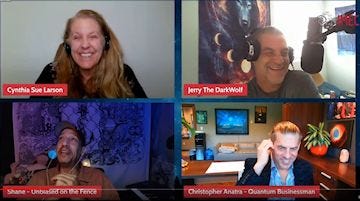
If you’re wondering what our upcoming live, in-person International Mandela Effect Conference in Branford, Connecticut, for this coming Labor Day weekend: IMEC 2023: Decoding the Matrix will be like, we created a short video for people considering attending. Christopher Anatra, Jerry Hicks, Shane Robinson, and I share what we love so much about our live, in-person conference, and why we think you’ll love to join us, if you can. It’s a great time to get your tickets, if you’re thinking about joining us at this event!
I invite you to explore some truly amazing reality shifts that have been reported over the past twenty plus years and posted at RealityShifters. Any time you’d like to remind yourself of some of the remarkable changes we’ve witnessed, I welcome you to browse through a few issues, and fall more deeply and fully in love with the wonder and magic of life!
- Love always,
Cynthia Sue Larson
email Cynthia at cynthia@realityshifters.com
Let’s Connect
P.S. Did you know that I share new experiences, tips, stories, and inspirational ideas at Facebook, Instagram, LinkedIn, Substack, Twitter, and YouTube? I look forward to seeing you there!
____________________________________________________
I’m on Patreon!
I welcome you to help support my work maintaining the RealityShifters website, ezine, blog, interviews, reviews, podcast and videos on Patreon, now accepting Euros, British Pounds, or U.S. Dollars:
http://patreon.com/cynthialarson
Patreon makes it easy to contribute as little as $1 per month to show your support and help cover the many costs incurred from my work. If you are not in the position to become my patron, no worries! Your friendship means the world to me. Thanks so much for your support!
____________________________________________________
Get your very own autographed books & CDs
in the RealityShifters Books and CDs Shop
You can get T-shirts, tote bags, clocks, bumper stickers,
rubber stamps and pet shirts at the RealityShifters shop at:
Zazzle RealityShifters store
There are lots of fun items here
designed to provide reminders to keep
asking the Cosmos to show us how good it can get;
you might just find the perfect thing!
Check out the new Mandela Effect items!
As an Amazon Associate I earn from qualifying purchases,
so all amazon purchases made via first clicking through
this newsletter or ezine help to support the RealityShifters
ezine and website. Thank you so very much!
_______________________________________________________________
- In This Issue:
(1) Spiritual Life Coaching
(2) Intriguing Events, Articles, Interviews, & Films
(3) Your Reality Shift Stories
(4) Mail Bag, Questions, and Answers
(5) Reviews that Shift Your Reality
(6) Join in the Discussion
(7) Noteworthy Web Sites & Ezines
_______________________________________________________________
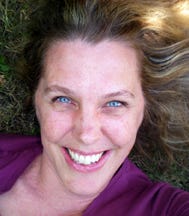
Cynthia Sue Larson MBA, author, speaker, and spiritual life coach
(1) Spiritual Life Coaching
Could you benefit from help facing a challenging issue in your life? Would you like clarity regarding an important decision? Could you use some help shifting your reality? Are you curious to know your divine gifts? Are you ready to feel energized? If you answered yes to any of these questions, you can benefit from Spiritual Life Coaching with Cynthia!
Contact Cynthia at cynthia@realityshifters.com to set up a life-enhancing telephone consultation today.
http://realityshifters.com/pages/consultation.html
- “If there is one thing I can be grateful for
it is that I trusted my intuition
and made contact with you–
and from that the gift of connecting to myself
(and other people) again!”
— Susan
_______________________________________________________________
(2) Intriguing Events, Articles, Interviews, & Films
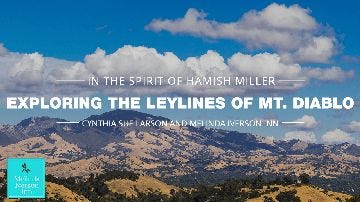
Dowsing Mt. Diablo Leylines
in the spirit of Hamish Miller
28 Jun 2023
12 minutes
Thank you for joining us on our exceptionally fun journey and maiden dowsing voyage, with Melinda driving, Cynthia holding the dowsing rods, and our canine friend, Zubin, supervising, then sleeping. What wasn’t recorded on our home video was our impromptu singing of “Can’t Take My Eyes off of You.” “You’re just too good to be true, can’t take my eyes off of you… I love you baby…” at the top of our voices, making up the lyrics as we went along, since we didn’t really know the lyrics. Melinda had heard the song the day before on a street corner played by a Mariachi band in San Francisco. The next morning, Cynthia and Melinda met for breakfast before the journey up Mt. Diablo, and both heard the exact same song playing again when visiting the lady’s room separately. Our sing-along on the way to the entrance to the park set the joyful tone for our adventure! We chose this destination since we felt drawn to exploring the intersection, or node, as it’s called, at the top of Mt. Diablo State Park, where according to Rory Duff’s structure of leylines, there are four intersecting category 4 lines. These lines intersect just above the parking area of Mt. Diablo State Park in Walnut Creek, California USA. With Hamish Miller as our inspiration, we took off up the road that coils around and up the mountain, crisscrossing back and forth over the intersecting energy lines that converge at the peak, and setting the intention that you who are watching could feel what we are feeling and join us in this process of discovery on this amazing dowsing journey. The closer we got to the top of Mount Diablo, the more energy pressure we began to feel, especially in the head area. We noticed that the lines were expanding, because the rods indicated a very wide and open posture as we drove through the leylines and on up to the convergence point as given to us by geobiologist Rory Duff and his exceptional research. And thanks to the expanding Emperor Dragon lines, during the solstices and equinoxes, when all these energy lines converge including these nodal points, it makes it much easier for people to become a part of this beautiful new world process we are in. You can read more about Leylines, energy currents and Emperor Dragon lines on Rory’s website https://roryduff.com. By the way there are no Emperor Dragon Lines on Mt. Diablo. Our terminology might be a bit different for Vortexes, Energy lines and leylines. We did the best we could with our explanation and understanding while having a jolly good time. At one point while driving and crisscrossing these lines, we picked up a bit of a different energy and the dowsing rods indicated that by spinning instead of the usual crossing or opening. That could be called a vortex. At 3,000 ft above sea level, we stood in the center of where the 4 lines crossed creating a 4th level node. It was windy and chilly, and the energy was wonderful. The activity of the rods changed yet again with both spinning in the same direction, clockwise. The they began pulsing as in turning, stopping, turning, stopping. While meditating on the lines there was a sense that one of the lines needed a bit of clearing and reconnecting work, so we went into meditation to see what was needed. After the clearing and connecting meditation there was a new sense that these nodes are helping us as the ‘Eyes’ of creation for the new world, and that they are points that assist us humans in tapping into the inspiration available for us to usher in this “new world.” Surrendering, accepting and trusting that there is a collaboration in the works allows us to explore a genuine sense of prosperity for all, that is sustainable and that can continue to build in a wonderfully positive way. The ‘eyes of creation’ is a co-collaborative process that we can all participate in.
Cynthia Sue Larson
talks about quantum jumps
1 Jul 2023
2 minutes
This is an excerpt from an interview with Cynthia Sue Larson on the Catherine Plano podcast.
IMEC Open Tables:
Shifty History
28 Jun 2023
3 hours, 8 minutes
What do long-concealed hidden ruins, strange national flag salutes, super-powered ancient electric cars, and an apparent change to a historic crash site have in common? These are some of the newest and strangest Mandela Effects that have come to our attention this month.
https://www.youtube.com/live/RVSVXycQN_0?feature=share

Quantum Leaps
and Infinite Possibilities
with Cynthia Sue Larson
21 Jun 2023
1 hour, 9 minutes
enjoyed a wonderful recent conversation with Catherine on the Catherine Plano Podcast. Episode 341: Quantum Leaps and Infinite Possibilities with Cynthia Sue Larson
_______________________________________________________________
(3) Your Reality Shift Stories
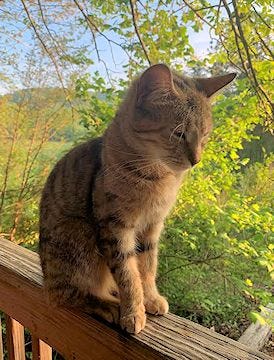
Tiffany’s Miraculous Healing
Tara
Salem, Oregon, USA
I will preface this by saying that I know, undoubtedly, this happened due to everything I’ve been learning from you. Because I applied your wisdom to the situation and the outcome was truly miraculous, I don’t think the outcome would have been the same had I not known something like this was possible. I believe in healing but this was different—everything was telling me she was gone for good and yet she’s here today and completely healthy. So here’s the story. Several months ago my neighbors moved away and left behind their cat, she is an orange tabby and her name is Tiffany. She needed a place to call home and would come by looking for food. Being the animal lover that I am, I couldn’t say no to her and eventually she claimed her new home here. She is an outside cat and loves hunting and climbing trees. She is very smart and tough yet also loving and sweet. I trust her to be outside, it always seems like she knows what she’s doing and has always been able to take care of herself just fine. Also, she always comes home to eat on time, morning and night. So I’ve never worried about her. Until one day recently she did not come home to eat her dinner, which was rare for her. I was a little worried but I assumed everything was fine and she would be back by morning. Well she was not back at her normal morning time. This had me pretty concerned but I remained optimistic. It was just before noon now and I was sitting outside listening to some videos as I do and I saw her sort of crawl out from underneath the deck of the porch where I was sitting. She was not acting right. She was basically crawling, acting very sporadically and could barely walk or stand. I did not know what on earth had happened to her. My dad had walked out and saw her and actually was so upset he just said “I can’t deal with this” and went back inside. It was very upsetting to see. At that moment in time it really did seem as if she had only come to say goodbye and had crawled off into the bushes to make her passing. This was really how it seemed and my dad thought she was gone forever. A day went by and he told me he had tried to look for her, in his words he wanted to give her a proper burial at least, but could not find her anywhere. During this time I wasn’t quite allowing myself to go there mentally. I had been listening to a lot of Cynthia’s videos and remembered her story about Ashes, a cat that had passed away, who she later found alive again in her reality. I decided to assume that all things are possible, and that since I hadn’t even fully accepted that Tiffany was gone, since I didn’t even fully know what was wrong or what had happened, I would remain open to the possibility of her being okay and returning, even though everything suggested against it, perhaps I could shift into that reality. A few days later, I was in my room, laying in meditation, when I hear my dad come running in the house and knocking on my door yelling “Tiffany is back, she’s alive!” I got up and went outside, and sure enough, there she was. He let me know she had actually been up on the roof, which I find extremely interesting, given the condition she was in. But that’s what caught his attention and how he knew she was back. She had somehow managed to get up there, and had now jumped back down, and he knew she was under the porch now. We were shaking treats, and calling for her, trying to get her to come out. She still wasn’t acting like she normally does. I could tell something was wrong, but at least I knew she was alive. I was thinking, “Wow, well this is progress. And if she can come back and get up on the roof after all this, maybe I really can shift to the reality where she is healed completely—” (It was so bizarre to me that she was able to get on the roof at this point; I intuitively knew something different and miraculous was going on, and that kept me inspired.) She finally came out when I was calling her, but she was so weak from not eating for a few days, and from whatever had happened, which I still was unsure (was she hit by a car? Was she attacked? Had she ate something bad?) She just kept falling over, laying down, and closing her eyes. She would eat one piece of food at a time, as I put it out for her. She did not have the strength to even lift her head or drink water from her bowl. I just kept sticking with my original thought process that somehow everything would be okay, and she would be fine. Though It really seemed like she could have died in that moment had I not decided to pick her up and rehabilitate her in a small cage. After I decided to do that, it seemed like she knew I was trying to help her. I was slowly able to get her to drink water from a straw, and gradually she was able to lift her head up and eat from her food bowl. She seemed to gain a little strength back each day. But each day presented new concerns, such as if her back end was messed up, would she be able to go to the bathroom? Would she be able to walk again? Did she have internal damage that I couldn’t see? (Keep in mind, I did not have the resources to take her to a vet, so healing her/ shifting to the reality where she healed was the only option.) With each passing day, the concerns went slowly away as she continued to improve, get better, and do everything normally. I just kept saying, “She gets better and better each day.” And she did, literally. She went from not even being able to walk, to her old ways of jumping up and climbing on things. She still struggled a bit; at this point I was pretty sure what had happened was that she had nerve damage from being hit by a vehicle, but that’s still a guess. A guess based on being able to feel her legs shaking by her rear where a cat has many nerves. (This was still very concerning, as I didn’t know if the damage was permanent or could be healed, yet I kept going.) I would put a little collar on her tied to a leash, and let her try to walk around with it on. She would, and once again she would improve a little more each day. It’s almost as if she knew I was helping her. She acted so sweet towards me, and would keep licking my hands, brushing up against my legs, and laying at my feet and meowing, as if to say, “Thank you.” After about two weeks of her healing from her “therapy” and resting in the cage, and gaining back her strength, and improving each day, she was really walking almost perfectly now! She actually started running so fast while she was on the leash that the collar broke, and I had to catch her! I guess that means she’s feeling much better now and back to her normal, healthy ways. My dad says he believes in miracles now, as he really thought she was gone, and now she is alive and well again. This experience happened at such an interesting time in my life, when I’m learning about how it is possible to shift into a more desirable reality, it really showed me and taught me experientially that truly anything is possible that I believe. There is so much to learn in this wonderful universe, yet I will forever know that no matter how things appear or seem, it really can work out miraculously, for the highest good of all. More and more, I seem to find myself asking , “How good can it get?” And every area of my life, and the lives of those around me seems to continue improving. Blessings to Cynthia for all she does and to everyone who reads.
Note from Cynthia: Thank you for sharing this beautiful miraculous healing experience with your amazing tabby cat, Tiffany! Thank goodness you were there for Tiffany, to look after her so lovingly, with consistently positive expectations that most certainly made a tremendous difference in her miraculous recovery. I’ve heard of a doctor who notices huge improvements for his patients when he asks them to rate their comfort level (rather than pain level) on a scale of one to ten, and they recover more quickly, with less need for further medications or procedures. It seems clear to me that thanks to your heartfelt and pure positive healing intentions, Tiffany knew in each and every moment that you believed in her full and complete recovery, helping to ensure such positive miraculous results.
-=-=-=-=-=-=-=-=-=-=-=-=-=-=-=-=-=-=-=-=-=-=-=-=-=-=-=-=-=-=-=-=
- Thank You for Sharing this Message with a Friend!
Would You Like to be a Subscriber?
You can view all past issues & subscribe by visiting:
http://realityshifters.com/pages/news.html
-=-=-=-=-=-=-=-=-=-=-=-=-=-=-=-=-=-=-=-=-=-=-=-=-=-=-=-=-=-=-=-=
Blue Riband product and ads no longer exist
Vivek
Lucknow, Uttar Pradesh, India
This reality shift has been haunting me for years. Around 1990 there used to be a full page advertisement in all premium magazines of India. The popular model, Malvika Tiwari, is reclining on a boat in an ocean with a bottle of blue riband lime cordial, her boyfriend is on other end of boat. Now I can’t find either the ad or the product. The product Blue Riband lime cordial was supposed to be a surrogate ad for Blue Riband gin. Blue Riband Gin is still being made, and later Blue Riband Duet that had lime cordial, that was added to the company’s products. But Blue Riband lime cordial has disappeared from the face of Earth, and with it, the beautiful ad. I know about a product Duet that was introduced later on—but, at best, Duet is a residue from across the veil. Alcohol ads were never allowed in India, and Blue Riband lime cordial was a surrogate ad. And now even surrogate ads are not allowed. Thanks for your interest; for me this is one of the biggest challenges to sanity.
Note from Cynthia: Thank you for sharing this news that Blue Riband lime cordial has disappeared, together with its beautiful advertisement image. Thank you so much for sharing with me some of the background that makes this Mandela Effect so amazing and impressive, such that people assume that probably people are mistakenly confusing Blue Riband lime cordial with the product Duet, which arrived later on.

Changes to “Aman” movie
Vivek
Lucknow, Uttar Pradesh, India
As fantastic as Blue Riband lime cordial is, there is one that tops it. In fact, I would say these two are the greatest enigmas of my life. By extreme stretch of circumstances, Blue Riband might have been removed from circulation, though possibility is almost nil, the one I am going to tell is out of this earth. The 1967 movie, Aman, starring Rajendra Kumar, had a scene at the end in which three ladies were engaged in animated conversation. One of the ladies, played by actress Lalita Pawar, mother of Rajendra Kumar in movie, said a certain thing to her potential daughter-in-law, the third lady was daughter-in-law’s mother. The ensuing dialogue is so sensational, that it’s a scriptwriter’s dream. And now the last 20 minutes of the movie have totally changed. The three ladies are not in reckoning at all. And the great Lalita Pawar is not even in the star cast. I last saw the movie in 2010 with my associate, on a television local channel. The dialogue was so sensational, that my associate jumped up with excitement. In fact it is worth a fortune. Rajendra Kumar died in 1999, and Lalita Pawar in 1998; the heroine of the movie, played by Saira Banu, is alive, now aged 78 years. There never was an alternate ending; in any case in 1967 there never was the culture of alternate endings. My associate still quotes that sensational dialogue that no longer exists on Earth. Try to investigate the movie; the incidence is a game changer in the world of high strangeness. I remember very well the quote; I am giving you the translation. The situation is that the hero, Rajendra Kumar, was doing his philanthropic work as a doctor, alleviating atomic bomb survivors of their suffering. In the course of his work, the doctor becomes blind. His mother, played by actress Lalita Pawar, along with his betrothed girl and her mother, arrive in Japan. The colleagues of Rajendra Kumar tell the ladies that he can recover his sight if someone donates their eyes. Lalita Pawar stares at the girl saying, “Daughter-in-law, in Mahabharata Gandhari spent her whole life blind-folded, in sympathy for her blind husband.” The girl, getting the cue that her would-be mother-in-law was alluding that she donate her eyes, snorted, “Those were decadent times when people were blind of senses,” and walks away in a huff. In the original Hindi, the statement itself is so sensationally funny that it can sell for $10,000. The rest of the 20 minutes of now-missing dialogue had a totally different storyline than the current version. Mahabharata, as you would know, is the holy epic of Hindu religion, along with Ramayana, the other epic.
Note from Cynthia: Wow! Thank you for sharing the change you noticed in the 1967 movie, “Aman,” starring Rajendra Kumar, where the memorable dialogue completely changed, and the actress Lalita Pawar is no longer even in the film! How amazing that your associate still quotes the sensational dialogue that apparently, never existed. This missing dialogue that you remember used to include the memorable actress, Lalita Pawar, truly is extraordinary and memorable. I’ve never heard of anything like it, and the fact that you and your associate both recall it so clearly indicates there has been quite a change to this movie. What a fascinating conversation this missing dialogue inspires. I wonder if perhaps it’s gone missing partly because some movie viewers found it to be distasteful or disrespectful? I witnessed a change to one of my books where I’d written something about my salad talking to me that was frequently offending many readers, and now my book has changed, and there is no copy of it containing the previously offensive material. This is such an important Mandela Effect—thank you so much for sharing this with me!
Airbus now launched a decade earlier
Vivek
Lucknow, Uttar Pradesh, India
Here is one anchor memory that you may have an idea of. I remember Airbus was launched in 1982 as against the current history saying 1972. At the time of the Airbus launch, my father discussed it, while reading the newspaper. And we had rented that house in 1978. So no chance of 1972.
Note from Cynthia: Thank you for sharing your memory that the aviation company Airbus got its start in 1982, and not 1972. I did travel in the early 1970s, and don’t recall flying on an Airbus in those years; it does seem like the first I really heard about this company was in the 1980s. Fascinating!
_______________________________________________________________
(4) Mail Bag, Questions, and Answers
Dear Cynthia,
Thank you, Cynthia. I need my positive energy because the Canadian wildfires have now started in Quebec and I have relatives living there. When the world seems to be falling apart, we truly need all the positive energy we can get.
—Mike
Dear Mike,
You are so very welcome. Thank you for doing your best to feel loving connection to the world. I am certain that when we feel loving kindness toward the Earth and one another, our focused intentions can bring miraculous healing quantum jumps.
love,
—Cynthia
___________
Dear Cynthia,
Thank you for this beautiful message. It is a good reminder of the power of remaining mindful of visions we have. My “dreams” most often are for processing undercurrents, while the matri comes in awake, by now showing codes in ways that are undeniable. I wish you a lovely day – oh, just noticed that it is 06/06 🙂
—Teresa
Dear Teresa,
Thank you for letting me know you appreciate this newsletter. How wonderful that you have dreams for processing undercurrents–possibly doing quite a bit to smooth the way for positive outcomes.
Wishing you and yours all the best, with much love,
—Cynthia
___________
Dear Cynthia,
I saw in your newsletter that one of your readers thought you used to say “how does it get better than this?” I thought you used to say this too! And I could have sworn that I saw you on Michael Sandler’s show on youtube, and you used the phrase then. In fact, I’ve seen his show since then, and he says it regularly. I thought he got this from you! Except I believe he says “any better” instead of just better. Do you have any recollection of this?
—Autumn
Dear Autumn,
I’m not sure when I began ending all my YouTube videos with, “How good can it get?” but I can find evidence I was doing that often enough back in 2014 that one interview I did with Tazz and Paula was given that name:
https://archive.org/details/podcast_the-tazz-paula-show_cynthia-sue-larson-how-good_1000333423049
I do remember having been a guest on Michael Sandler’s show, and having been pleasantly surprised at the time to learn his catchphrase is so similar to mine! I’ve only known Sandler to say, “How can it get any better than this?” or something to that effect. I don’t know the story on when MIchael Sandler began saying what he says, but I’ve only ever said the shortest version, “How good can it get” which for myself also quietly becomes a mantra of “How good can I get” and also “How God can I get.” Those modifications fit better with the short version I remember always having said, but don’t seem quite so adaptable to the other versions.
lots of love and blessings,
—Cynthia
___________
Hi, Cynthia,
I listened to your interview on the Gaia podcast today at work (so fascinating, by the way!) As you were telling the story about the rose, I thought to myself, “Oh, I’ve heard this story before. But wait, didn’t she just say it was within 24hrs?” So I rewound it and that is what you said! It seems like way too unique of a story to happen to 2 different people, but I remember hearing it before. I checked the date the podcast came out, and it said Tuesday, so I wouldn’t have heard it there on Gaia. Maybe interview was held in editing for a long time and you did different interview including that story in the meantime? This is what I remember from the person’s story: Two friends in a cafe, go to take a photo, rose appears out of nowhere. The woman decides to take the rose home, planning to save or dry it. She carefully packed it in her bag, but when she got home or to the next hotel it was gone. Really gone, not in the bag where she was certain she put it. Then weeks or months later, it showed up in the same bag again! Was this your story? Did your rose disappear and reappear? Did I hear it somewhere else? Or could it be a Mandela effect itself? If I’m wrong, I probably sound like a crazy person. But my thoughts kept going back to it. And I’m so excited, interested, and confused, I just had to ask, especially considering the topic of the interview! I’ve had some random mystical experiences, saw in my mind’s eye what was happening outside one time, felt myself break through a barrier of manifestation (once by accident! :-), etc, but it always happens when I least expect it, ha! I haven’t yet learned how to do it at will, but I think I’m on the right path. I’m excited to check out your books! Anyway, thanks for listening/reading. And thank you for sharing your wisdom.
Aloha,
—Kari
Dearest Kari,
Thanks so much for writing to me about my experience with the rose! Yes, you are remembering the full story of that rose–the one that first appeared fresh and fragrant out of thin air that night I was having dinner with a friend in Boulder, Colorado at the Dushanbe tea house—and then it vanished when had so carefully planned to bring it home to California—only to reappear at the bottom of my most frequently used purse. That’s where I’d last seen it (fresh and beautiful) and then some time later–may weeks later–it reappeared perfectly fine, uncrushed, at the bottom of that purse that I’d been tossing things into regularly for weeks! It appeared the day I was interviewed by Candace Craw Goldman, and I was so astonished that day!
With love and thanks and blessings,
—Cynthia
___________

Dear Cynthia,
This attachment reminded me of your train dream, I can’t stop thinking about it. I loved reading it so much. You are sooo inspiring. I love all your content Cynthia. Most importantly I trust you!
Peace and all good things,
—Julie
Dear Julie,
Thank you for your kind words and good wishes–much appreciated. And thank you so very much for this lovely visual–I love it! And yes, it exactly fits the dream I shared!
With love and thanks and blessings,
—Cynthia
___________
Good morning Cynthia.
Good morning Cynthia. My grandson and I are enjoying your Karen Kimball book. We wondered if this story is from your life? Did these things happen to you? My grandson would really like it if there was a movie made from the book. Any plans for a Karen Kimball series?
Lots of Love your way,
—Shirley
Dear Shirley,
Thank you so much for your message, and I’m delighted to hear that you’re enjoying my book, “Karen Kimball and the Dream Weaver’s Web”! Yes, several similar things happened to me as some aspects of the story. When I wrote this book, I wanted to cover some of the real life magic that we can experience in our lives. I may write another book about Karen Kimball’s continuing adventures, and appreciate your taking an interest. I’d love a movie made from this book, too! I wrote a song, Karen Kimball’s song, “It’s All Right,” that you might enjoy:
lots of love and thanks,
—Cynthia
___________
____________________________________________
(5) Reviews that Shift Your Reality
As an Amazon Associate I earn from qualifying purchases; your purchases on amazon after clicking through these links help support the realityshifters website and ezine. While many materials are received for review, only the best get the benefit of receiving mention in RealityShifters and having a review written and posted. If you enjoy reading these reviews, please feel free to express your appreciation by clicking through these links before making purchases at Amazon.com, so you can help offset the costs of the RealityShifters web site and ezine. You can see some excellent metaphysical books at: http://realityshifters.com/pages/reviews.html
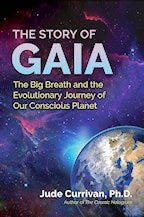
The Story of Gaia:
The Big Breath and the Evolutionary Journey
of our Conscious Planet
by Jude Currivan
Sharing the Wisdom and Beauty of Cosmic Conscious Design
https://www.amazon.com/Tantric-Psychophysics-Structural-Dynamics-Consciousness/dp/164411531X
Currivan takes us a dazzling journey through the evolutionary progress of ourselves and Earth since the dawn of time, from a cosmic view. Recognizing our universe as primarily consisting of consciousness, as “a great thought of cosmic mind,” we can see how such information truly is “in-formation,” such that there is beautiful harmonious order to stars, planets, and galaxies moving and evolving as an ever-informing hologram. Rich in wonder and detail, The Story of Gaia is told from the perspective of Gaia herself, sharing how she and all that is were sung into existence, and how each step of Gaia’s growth progressed. This is the amazing story of how something as wonderful as our Earth and all her life forms have come into being since the first tiny Planck moment of time, evolving through conscious inspiration and guidance to become the beautiful planet we know as mother Earth.
_______________________________________________________________
(6) Join in the Discussion
Let’s Connect

Would you like to be part of a community of positive-minded people who share your fascination with reality shifts and finding out how good life can get? Do you have questions you’d like to ask, or reality shifting stories you’d like to share? Have you read good books, seen intriguing movies, or found a web site that relates to reality shifts? Get the inside scoop on reality shifts, contemplate the big questions and make new friends in the realityshifters discussion group at:
https://groups.io/g/realityshifters
_______________________________________________________________
(7) Noteworthy Web Sites
Now you can earn money as an Affiliate for RealityShifters ebooks!
Check it out at:: http://realityshifters.com/pages/affiliate.html

KA GOLD JEWELRY
Find the perfect rings, pendants, and earrings for people who appreciate the very finest gold and silver jewelry. Artist-designed, hand-crafted Ka Gold Jewelry is based on spiritual symbols and sacred geometry.
http://www.ka-gold-jewelry.com/index.php?ref=42

TAROT READINGS — FREE!
Free tarot card readings can help guide you through your troubled emotions and clouded thoughts.
http://www.free-tarot-reading.net/index.php?affID=1006
_______________________________________________________________
Over 11,000 RealityShifters Subscribers live in over 84 countries around the world — with the majority in the United States of America, Canada, the United Kingdom, Australia, Africa, New Zealand, India, the Netherlands, Malaysia, Mexico, Italy, Sweden, Germany, Brazil, Belgium, Singapore, South Africa, the Philippines, Japan, Norway, Ireland, Denmark, Spain, Israel, and Panama.
_______________________________________________________________
Your One Stop Reality Shift Shop
RealityShifters® has a secure “Shopping Cart”
to make it easy to view and place your order.
Get autographed copies of AURA ADVANTAGE & KAREN KIMBALL,
the AURA HEALING MEDITATIONS CD and more at:
http://realityshifters.com/pages/shop.html
_______________________________________________________________
Has this issue of RealityShifters been helpful to you?
All donations are much appreciated!
Contact and Support RealityShifters
_______________________________________________________________
PERMISSION TO REPRINT: Please feel free to reprint any items from “RealityShifters®” in your own print or electronic newsletter, provided you also include the following paragraph:
- Reprinted from RealityShifters®, a free ezine featuring
articles, stories, book reviews and websites for shifting
reality. Subscribe at
- and receive
free gifts when you recommend this web site to your friends.
_______________________________________________________________
Would you like to share a reality shift story?
Send it to Cynthia at cynthia@realityshifters.com
Cynthia Sue Larson
P.O. Box 7393
Berkeley, CA 94707-7393
USA
_______________________________________________________________
Thank you for sharing this message with a friend!
When forwarding this message, please remove the opt-out link at the very end,
so your subscription is not inadvertently cancelled.
To subscribe to the RealityShifters and see all previous issues, visit:
http://realityshifters.com/pages/news.html
 How can we stay positive when it seems like the world is falling apart? Geological evidence of cycles of cataclysmic polar shifts, magnetic field changes, and weather changes suggest we are at the brink of another such change, while world governments appear to be engaged in a war of information and perception.

 Just as Buckminster Fuller created geodesic domes by recognizing that the triangle is the most stable building block, everything humans build can only be as good as their fundamental components. We can thus envision upgrading our old Drama triangle associated with conflict, wars, trauma, and strife with a new Shambala Triangle. We can build our new world on this foundation m honoring and recognizing all those who choose to keep hearts and heads open to divine unconditional love.
 The Inversion


 How can we access optimal parallel worlds?
 Can you imagine feeling safe, loved, and divinely inspired–no matter what is happening?
 What if we don’t all share the same physical world? What if each person’s physical reality is not the same as anyone else’s?
 Sometimes we feel unsettled as we receive signs or signals that startle or surprise us. These messages might be a sign that we’re receiving information from a higher level of ourselves that are exactly what we need at this time.
 RealityShifters Blog
Recent Comments